
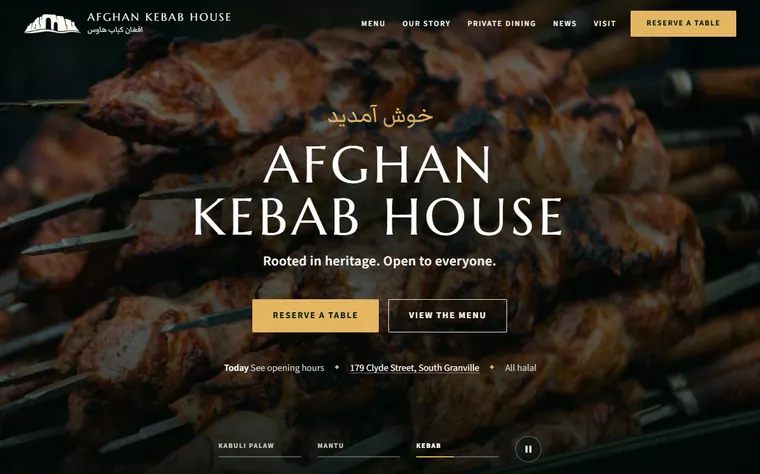
Restaurant websites tend to go wrong in one of two ways. The menu is a PDF nobody has touched since opening day, or the booking button sends guests off to a third-party platform that charges the restaurant for every table. A family restaurant needs a website the family can actually keep current, and one that does the job that matters most: getting people through the door.
The brief
The family wanted a website that felt like the restaurant: warm, proud of its Afghan heritage and welcoming to everyone. It had to show the full menu properly, take table bookings directly instead of through a booking platform, handle group, catering and event enquiries, and above all be something the family could update themselves, without calling a developer every time a price or an opening hour changed.
What we built
- Online table bookings, built in. Guests choose a date, time and party size and get a booking code on the spot, which they can use with their phone number to look up or cancel. Every rule (party size, notice, how long a table is held, how many guests the room can seat at once) is checked on the server, so two guests can never both get the last table.
- A custom CMS made for this restaurant. The family signs in to their own website editor to change the menu, prices, photos, opening hours, closed days, booking rules and every heading and paragraph on the site.
- Bookings and enquiries in one place. Each day's guests by sitting, phone bookings added by staff, and group, catering and event enquiries from the private dining page. Owner, editor and host logins mean front-of-house staff only see what they need.
- A full menu, not a PDF. Course tabs from breakfast to dessert, dishes with their Dari names, vegetarian and gluten-free marks, a vegetarian-only switch and dish photos.
- Photos handled for them. Photos uploaded in the editor are resized automatically for phones and big screens, and each one gets a focal point so crops keep the dish in view.
- News that looks after its own SEO. Each news post gets its own page, and the sitemap, structured data and AI-readable summary are generated from the published content, so new posts and menu changes reach Google without anyone touching code.
- Opening hours that are always right. Today's hours show on every page, and a reserve button stays within reach on a phone.
Why a custom CMS
A website builder can give you a menu page. What it can't do is tie the restaurant together. Here, the hours table on the home page, the "open today" line on every page and the booking calendar all read from the same place, so when the family changes Friday's closing time once, the website and the bookings both follow. Hours, closed days and booking rules change the moment they're saved, while page and menu edits wait as drafts until someone presses Publish.
Editing is built for people who run a kitchen, not a website. Changes save as drafts with a live preview beside them, and clicking anything in the preview jumps straight to its field. Every published version is kept, so any earlier version can be restored in a click, and if two people edit the same page at once, nobody's work is quietly overwritten. The CMS also speaks the restaurant's language: dishes with Dari names, breakfast, lunch and dinner sittings, and a notice bar for holiday hours. And there's no booking platform subscription or per-booking fee to pay.
Design and build notes
The design takes its cues from the restaurant's Bamiyan cliff logo: warm, earthy colours with gold accents, an elegant serif for the name, and Dari script set in its own typeface wherever it appears. Big rotating dish photos lead the home page, because food sells food. The pages are fast static files with the content already written in, so Google and link previews see the whole menu, while the CMS quietly brings in anything published since.
Running a restaurant, cafe or other hospitality business? See our web design service, browse the packages and pricing, or request a fixed quote and we'll reply within one business day.